Nothing wastes a trip faster than spending your first two days in a foreign city half-asleep at 3 PM and wide awake at 3 AM. I’ve flown enough long-haul routes now — Delhi to New York, Mumbai to Sydney — to have tested most of the jet lag “cures” out there. Some genuinely work. Others are nonsense. Here’s how to avoid jet lag on long-haul flights, based on what actually holds up.
What Causes Jet Lag in the First Place?
Direct answer: Jet lag happens when your body’s internal clock (circadian rhythm) stays set to your departure time zone while your surroundings shift to a new one. Crossing three or more time zones typically triggers noticeable jet lag, with eastward travel generally causing worse symptoms than westward travel.
Adjust Your Schedule Before You Fly
This one actually makes a measurable difference, in my experience. Starting 2-3 days before departure, shift your sleep and meal times by 30-60 minutes toward your destination’s time zone each day. It sounds tedious, but even a partial adjustment softens the landing.
Light Exposure: The Most Underrated Trick
Direct answer: Strategic light exposure is one of the most effective tools for resetting your circadian rhythm — seeking morning sunlight at your destination if you traveled east, or evening light if you traveled west, helps your internal clock adjust faster than sleep timing alone.
- Flying east (e.g., India to Europe): seek bright light in the morning at your destination
- Flying west (e.g., India to the US): seek bright light in the evening
- Avoid bright screens right before your destination’s local bedtime
In-Flight Habits That Help
- Set your watch to destination time as soon as you board — mentally committing helps
- Sleep on the plane only if it aligns with destination nighttime, not just because you’re tired
- Stay hydrated aggressively; cabin air is extremely dry and dehydration worsens jet lag symptoms
- Skip alcohol on the flight — it feels relaxing but actually disrupts sleep quality and worsens recovery
Does Melatonin Actually Work?
Reasonably well, based on both my experience and general research consensus. A small dose (0.5-3mg) taken close to your destination’s bedtime for the first few nights can help reset your rhythm faster. Check with a doctor first if you’re on other medications though.
Timing Your Arrival Activities
Try to stay awake until a reasonable local bedtime on arrival day, even if you’re exhausted. Napping for more than 20-30 minutes on arrival day often backfires, extending the adjustment period by another day or two.
Food and Caffeine Strategy
Eating meals aligned with destination time, starting the moment you board if possible, signals your body’s clock alongside light exposure. Limit caffeine to mornings only once you land — an afternoon coffee “just to push through” often extends jet lag rather than solving it.
How Long Does Jet Lag Typically Last?
Direct answer: As a rough rule, full recovery from jet lag takes about one day per time zone crossed, though this can be shortened to half that with proactive light exposure, sleep scheduling, and hydration strategies.
[link to related guide: Travel Insurance 101 here]
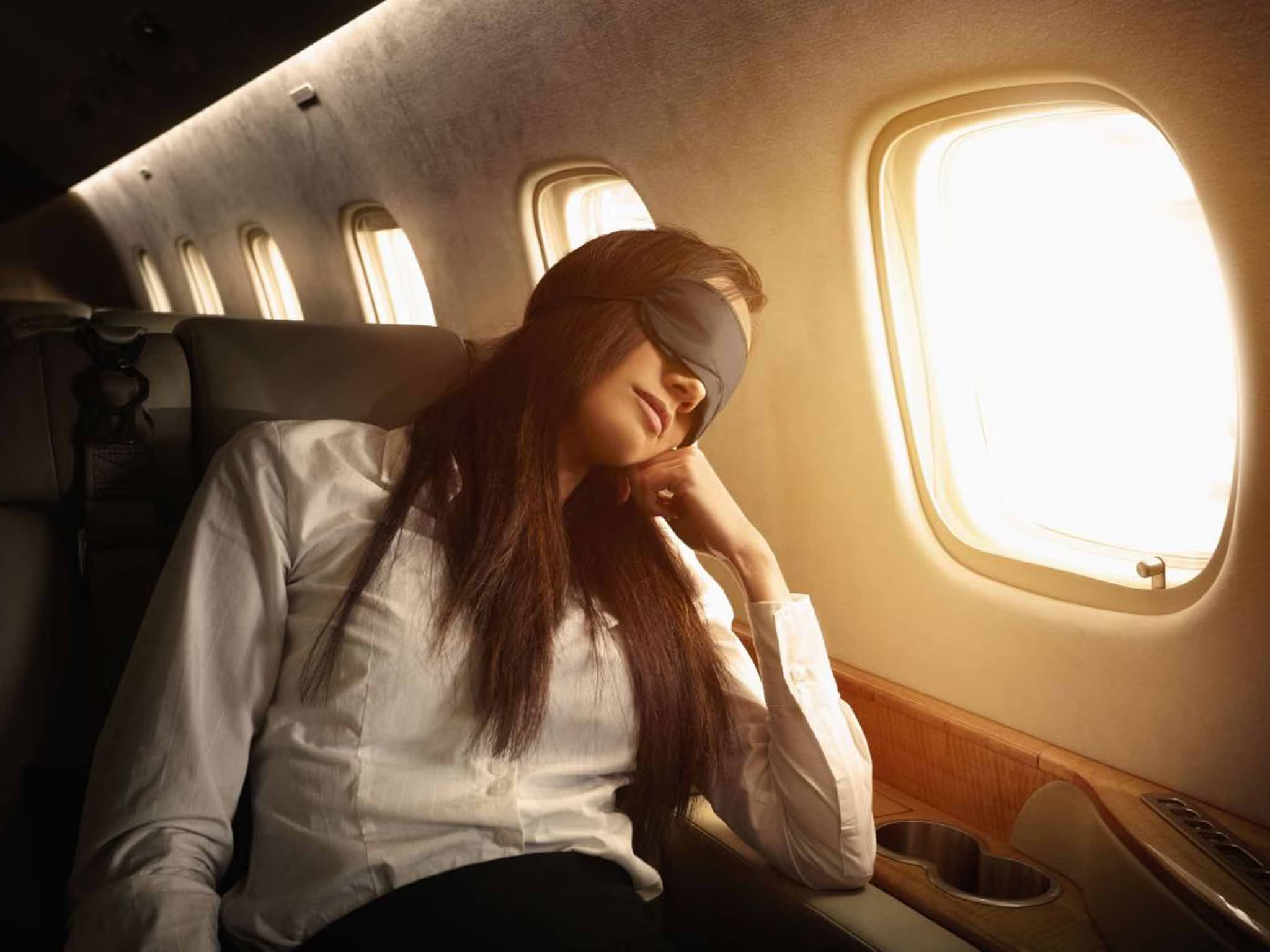
Alt text suggestions: “Traveler sleeping on long haul flight with eye mask,” “Morning sunlight through airplane window,” “Person adjusting watch to new time zone at airport”
FAQ
Does drinking water really help with jet lag? Yes, dehydration significantly worsens jet lag symptoms, so staying well-hydrated before, during, and after a long flight genuinely helps recovery.
Is jet lag worse flying east or west? Generally worse flying east, since it requires your body to “advance” its internal clock, which most people find harder than “delaying” it when flying west.
Should I sleep on the plane to avoid jet lag? Only if the sleep aligns with your destination’s nighttime hours — sleeping at the wrong time on the plane can actually make adjustment harder.
How much melatonin should I take for jet lag? A low dose, typically 0.5-3mg, taken near your destination’s bedtime for a few nights is commonly recommended, though it’s worth checking with a doctor first.
Can exercise help reduce jet lag symptoms? Light exercise, like a walk outdoors in daylight upon arrival, can help reset your circadian rhythm faster than staying sedentary indoors.
Conclusion
Learning how to avoid jet lag on long-haul flights won’t eliminate it completely — your body genuinely needs some time to catch up. But between pre-flight schedule shifting, smart light exposure, and cutting back on alcohol and long naps, you can realistically cut recovery time in half. Try it on your next long-haul trip and actually enjoy day one instead of sleeping through it.